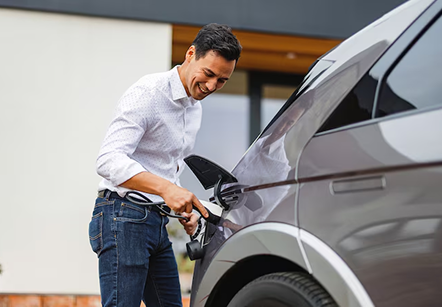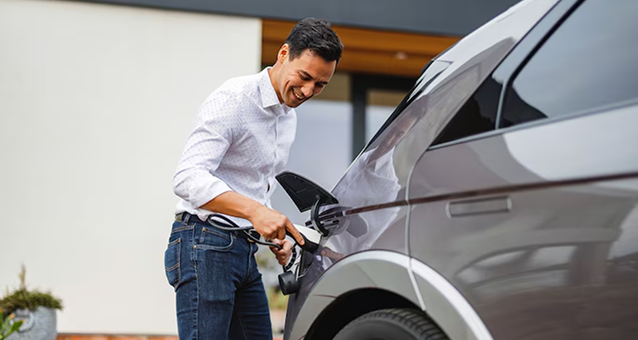
As the first generation to grow up in a world of smartphones and constant digital connectivity, Gen Z is generally more adept with technology than others. As they begin to enter the workforce and make more large-purchase decisions, electric vehicles (EVs)opens in same window are emerging as an appealing choice. Here’s why.
A love for innovation
A 2025 McKinsey studyopens in new window found that 65% of Gen Zers are more willing than previous generations to “splurge” on things that matter to them. This is especially true when it comes to certain technology and experiences, which they see as essential investments rather than optional luxuries.
Electric vehicles’ cutting-edge features could be more likely to align with what Gen Z knows and loves. EVs today don’t only offer a way of getting from point A to point B — they often offer seamless integration with smartphones, allowing users to manage vehicle settings and check battery levels from their devices. Some EVs even feature supervised autonomous driving capabilities, transforming them from traditional cars into futuristic, tech-forward vehicles.
The influence of social media
Social media is one of the primary channels through which Gen Z learns about products, including cars. Platforms like TikTok, Instagram and YouTube have become hubs for car reviews from both journalists and influencers, and car brands are increasingly leveraging social media to market their EVs to their demographic.
One example is the famous influencer David Dobrikopens in new window, who boasts 17.2 million subscribers on YouTube. Since 2020, Dobrik has partnered with various companies to give away more than 15 Tesla cars. But how do participants enter to win these cars? They posted Dobrik’s Instagram postopens in new window of a Tesla to their own accounts and tagged a friend in the commentsopens in new window, acting as an advertisement for the electric vehicle that aims at Dobrik’s largely Gen-Z audience. He then posts videos on YouTube and TikTokopens in new window of the giveaway recipients receiving their new car, often getting around 12 million views.
While the Dobrik example may be extreme, studies have found significant reliance on content creators when it comes to car purchases. A December 2025 global study by Snap, Havas Media, and Alter Agents found that 74% of Gen Z shoppers use social media during their vehicle research, and 81% are specifically considering an electric or hybrid optionopens in the same window.
Influencer content on social media not only informs (and markets to) Gen Z about EVs, but also creates a sense of excitement around these cars. As influencers continue to share their experiences, EVs have become synonymous with tech-savviness and modernity.
A changing relationship with driving
Compared to previous generations, Gen Zers are less likely to hold a driver’s license or pursue car ownership. Department of Transportation data shows that between 1983 and 2023, the percentage of 16-year-olds with driver’s licenses declined from over 46% to just 25%. Similarly, the percentage of 18-year-olds with driver’s licenses dropped from 80% to 60%.
While this shift could be due to a variety of factors, convenience tops the list. As this March 2025 article details, while a driver’s license used to be seen as a ticket to freedom, Gen Z’s access to a plethora of app-based delivery services and ride-sharing apps has made it easy to get food, make purchases, and see friends without the need to drive. But as Gen Zers grow older and age into the workforce, they may be more likely to buy a caropens in the same window — and low-maintenance, app-managed EVs could offer the convenience to which Gen Z has become accustomed.
In Summary: As Gen Z becomes a more significant consumer group, EVs could capture their attention with a blend of technology and convenience that this generation values.
To learn more about EVs, visit www.Chase.com/EVopens in the same window.